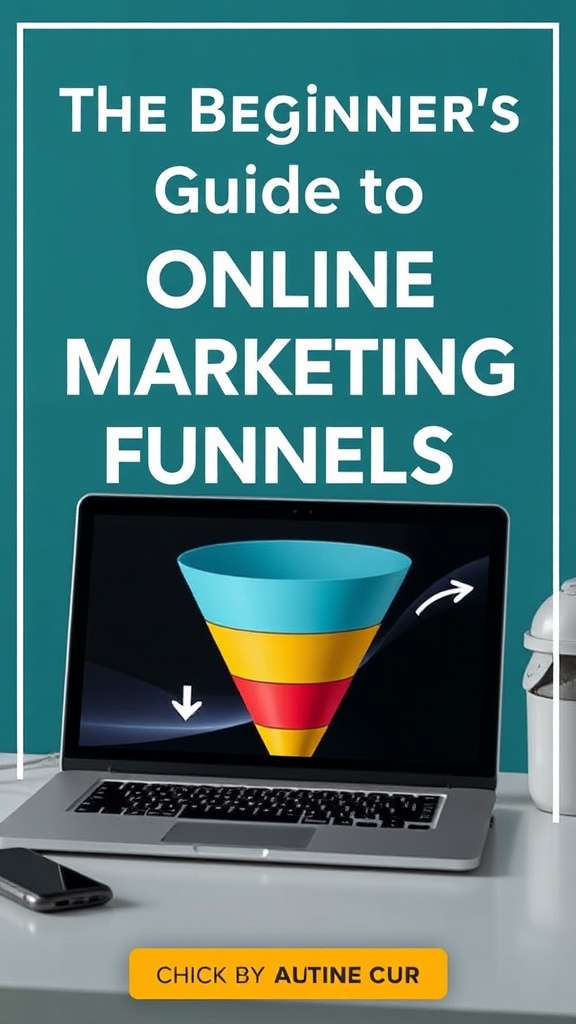
The Beginner’s Guide to Online Marketing Funnels: From Stranger to Customer Step-by-Step
The Beginner’s Guide to Online Marketing Funnels: From Stranger to Customer Step-by-Step
Is your online marketing stuck at “post and hope”?
If you’re getting clicks but not customers, the missing piece is usually a simple, clear funnel—not another platform, trick, or hack.
A funnel sounds complicated, but it’s really just the path someone takes from stranger → visitor → lead → customer. When you understand that path, every piece of your marketing has a job, and you stop guessing.
This guide walks you through how to build a beginner-friendly online marketing funnel that works for small businesses, coaches, and creators—even if you’re not “techy.”
What You’ll Learn
In this guide, you’ll discover:
-
The core stages of an online marketing funnel (in plain English)
-
How to plug your website, content, and email into a simple funnel
-
Where ClickBank or other offers can fit into your funnel without feeling spammy
-
The exact first steps to build your own funnel this week
Introduction: What Is an Online Marketing Funnel?
An online marketing funnel is simply the journey someone takes with your business:
-
They discover you.
-
They get value from you.
-
They trust you.
-
They take you up on an offer.
Most small businesses accidentally scatter these steps all over the place—random posts, random links, random pages. This guide helps you pull them together into a simple, repeatable system.
If you want more breakdowns like this, you can always dive deeper here:
👉 Learn/value: https://melvinleforbes.com/blog
Stage 1: Awareness – How People First Find You
This is where people first notice you exist.
Common awareness channels:
-
Social media (Reels, TikToks, posts)
-
SEO (Google search)
-
YouTube videos
-
Guest content on other people’s platforms
Your job at this stage:
Show up consistently with helpful content focused on your audience’s real problems and questions.
Actionable Insight:
Pick 1–2 main awareness channels and commit to them for 90 days, rather than bouncing between 5.
Stage 2: Interest – Turning Clicks Into Curiosity
Once someone sees your content, the next step is getting them to lean in:
-
Reading your full post
-
Watching your video to the end
-
Clicking “see more.”
-
Visiting your website
This is where strong hooks, clear headlines, and simple stories matter. You’re not selling here—you’re proving you understand their situation.
Example:
Instead of “5 Tips for Marketing,” try:
“Why Your Last Marketing Campaign Flopped (and How to Fix the Next One).”
Stage 3: Lead – Capture, Don’t Just Impress
Here’s where most people lose money:
They impress…
But they don’t collect contact info.
Your goal is to convert casual visitors into leads by offering something valuable in exchange for their email:
-
A checklist
-
A short guide
-
A mini video training
To make this work long-term, you need an email platform. For beginners, I recommend:
👉 Email starter: https://melvinleforbes.com/AWeber
If you’re already treating your list like a serious asset and want more advanced features:
👉 Email Pro: https://melvinleforbes.com/AweberPro
Stage 4: Nurture – Building Trust With Email and Content
Once someone joins your list, don’t ghost them.
Use email to:
-
Share quick wins and tips
-
Tell stories that show you “get it”
-
Walk them through the problem and the solution
This is where you go deeper than social media allows.
Mix value emails with soft offers and links back to:
-
Your blog for deeper content → https://melvinleforbes.com/blog
-
Your story so they know who’s talking → https://melvinleforbes.com/about-mel
Stage 5: Offer – Making a Clear, Aligned Invitation
Only after you’ve built awareness, interest, and trust does your offer make sense.
Your offer might be:
-
Your own product or service
-
A ClickBank product that solves their problem
-
A training that gives them a full plan
When I want to send people to a clear, step-by-step training, I use:
👉 Coaching/training replay: https://melvinleforbes.com/web
The key is that the offer must:
-
Match the problem you’ve been talking about
-
Feel like the natural next step
-
Be presented clearly (“Here’s who this is for, what it does, and how it helps”)
Practical Example: Simple Funnel for a Small Service Business
-
Post weekly tips on social media about your service area.
-
Invite followers to download a checklist from your website in exchange for their email address.
-
Send a 5-email sequence with value + stories.
-
In email 5, offer a call, a package, or a recommended product (your own or from ClickBank).
That’s a funnel. Not fancy—just intentional.
Getting Started: Your First Funnel in 7 Days
Day 1–2: Choose your awareness channel and one core problem you help with.
Day 3–4: Create a simple lead magnet (e.g., a checklist or one-page guide).
Day 5: Set up your email list with a welcome email.
Day 6: Create 1–2 posts that point people to your lead magnet.
Day 7: Add a soft offer to the end of your welcome email series.
Conclusion
Online marketing funnels don’t have to be complicated.
When you see it as a series of small steps instead of some giant, mysterious machine, it becomes something you can actually build—and improve over time.
If you want to plug this into a full, guided plan, that’s what the training here is for:
👉 https://melvinleforbes.com/web