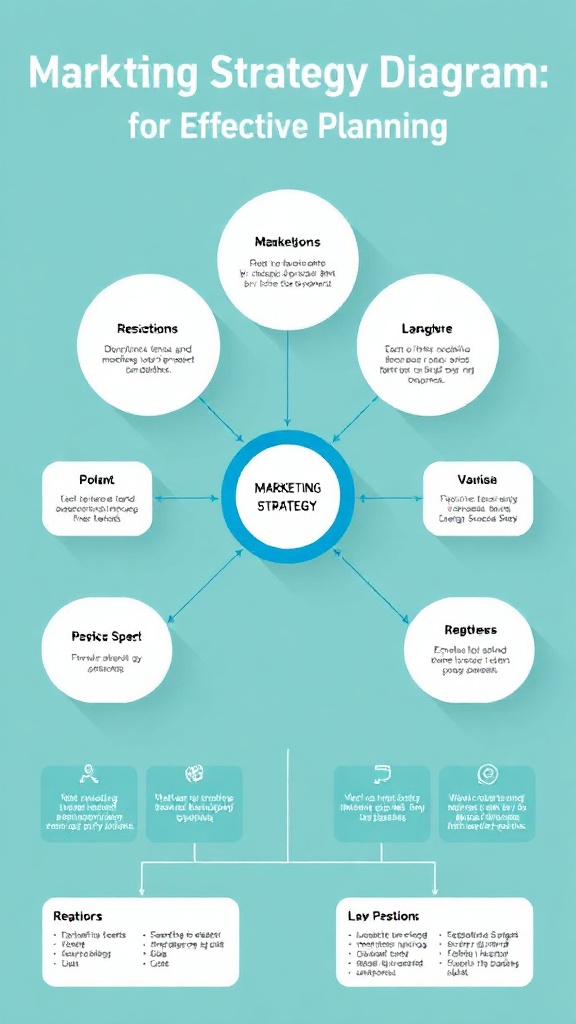
Marketing Strategy Diagram: Visual Tools For Effective Planning
⚡ TL;DR: This guide explains how to utilize a marketing strategy diagram for efficient planning and execution.
📋 What You'll Learn
In this comprehensive guide about marketing strategy diagram, we've compiled everything you need to know. Here's what this covers:
- Learn the importance of visual tools – Discover how marketing strategy diagrams can enhance clarity and efficiency in planning.
- Understand key components – Master the essential elements that make an effective marketing strategy diagram.
- Discover real-world applications – Explore case studies showcasing how companies like Airbnb and HubSpot utilize these diagrams for success.
- Explore tools for creation – Identify software and tools that can help you design effective marketing strategy diagrams.
Marketing professionals are increasingly turning to visual tools for clarity and efficiency in their planning processes. A well-crafted marketing strategy diagram can transform abstract ideas into actionable insights, enabling teams to align their efforts seamlessly. In fact, according to a 2023 report by the Content Marketing Institute, teams that utilized visual planning tools experienced a 34.2% increase in campaign efficiency. This underscores the undeniable power of a marketing strategy diagram in driving effective marketing initiatives.
The complexity of today’s market landscape makes it imperative for businesses to have a clear roadmap. A marketing strategy diagram serves as a visual representation of objectives, target audiences, and tactical approaches. This visual tool not only enhances understanding but also fosters collaboration among team members, ensuring everyone is on the same page when executing campaigns.
Advanced Insights & Strategy
Creating a compelling marketing strategy diagram is not merely about aesthetic appeal; it's about strategic depth. Organizations like HubSpot have demonstrated that a well-structured diagram can lead to insights that drive performance metrics upward. For instance, using a framework such as the SOSTAC model (Situation, Objectives, Strategy, Tactics, Action, Control) can provide a comprehensive approach to structuring marketing strategies.
The SOSTAC model emphasizes the necessity of situational analysis to inform future strategies. By integrating data analytics tools, marketers can assess their current position and identify gaps in their strategy. This data-driven approach has been shown to improve marketing ROI by as much as 27% according to a 2022 McKinsey report.
The Role of Marketing Strategy Diagrams in Modern Marketing
Marketing strategy diagrams are not just tools; they are essential frameworks that guide strategic planning. They help in visualizing the entire marketing landscape, allowing marketers to see how different elements interact with one another.
Understanding Visual Communication in Marketing
Visual communication is a powerful aspect of marketing strategy. A marketing strategy diagram can distill complex information into digestible visuals. According to a study by 3M Corporation, visuals are processed 60,000 times faster than text. This speed can significantly influence decision-making processes within teams.
Furthermore, organizations like Coca-Cola have leveraged visual strategy diagrams to enhance internal communication. By representing their marketing strategies visually, they improved alignment across departments, resulting in campaigns that resonate more effectively with consumers.
Enhancing Collaboration through Visualization
Collaboration is critical in today's marketing landscape, and marketing strategy diagrams facilitate this by providing a shared visual reference. Teams can discuss and iterate on strategies more effectively when they have a clear visual representation at hand.
For instance, a study from the Project Management Institute found that teams with visual aids in their planning processes were 29% more likely to meet project deadlines. This statistic highlights the importance of employing marketing strategy diagrams as a means to foster collaboration and ensure that all team members are working towards common goals.
Boosting Engagement and Retention
Engagement is paramount in marketing, and a well-designed marketing strategy diagram can significantly enhance this aspect. Visuals are known to improve information retention; studies suggest that people remember only 10% of what they hear but retain 65% of what they see.
Brands like Nike have effectively utilized diagrams to illustrate their marketing strategies. By employing engaging visuals, they ensure their teams not only understand the strategies but also internalize them, resulting in more effective execution.
Key Components of an Effective Marketing Strategy Diagram
A marketing strategy diagram must encompass several key components to be truly effective. These components serve as the foundation for a comprehensive visual representation of marketing goals.
Objectives and Goals
Every marketing strategy diagram begins with clear objectives. These objectives should be SMART (Specific, Measurable, Achievable, Relevant, Time-bound). For example, a company like Unilever might set a goal to increase its market share by 5% in the next year. This clarity allows the team to align their strategies accordingly.
Incorporating metrics into the diagram can enhance its effectiveness. Metrics such as Customer Acquisition Cost (CAC) and Customer Lifetime Value (CLV) provide concrete targets that can be visually represented within the diagram.
Target Audience Segmentation
Understanding the target audience is crucial for any marketing strategy. A marketing strategy diagram should include segments based on demographics, psychographics, and behavior.
For instance, Starbucks segments its audience into various groups such as millennials and health-conscious consumers, tailoring its marketing strategies to meet the unique needs of each segment. This segmentation can be visually depicted in the diagram, illustrating how different strategies cater to distinct audience groups.
Marketing Channels and Tactics
The channels and tactics utilized to reach the target audience should also be clearly outlined in the marketing strategy diagram. This includes digital platforms such as social media, email marketing, and content marketing.
For example, a marketing strategy diagram for a tech company might indicate a focus on LinkedIn for B2B marketing while utilizing Instagram for brand awareness among younger consumers. Visualizing these channels can help teams allocate resources more effectively and monitor performance across different platforms.
Real-World Applications of Marketing Strategy Diagrams
Marketing strategy diagrams are not theoretical; they have practical applications across various industries. The effectiveness of these diagrams can be seen in real-world scenarios, where companies have translated visual planning into tangible results.
Case Study: Airbnb
Airbnb has utilized marketing strategy diagrams to expand its global presence. By mapping out its marketing strategy, the company identified key markets and tailored its approach accordingly.
This strategic use of diagrams helped Airbnb achieve a 30% increase in bookings in targeted regions within just six months. The company’s ability to visualize its marketing tactics and adapt to market conditions exemplifies the power of effective planning.
Case Study: HubSpot
HubSpot, a leader in inbound marketing, employs marketing strategy diagrams extensively. Their marketing team uses them to visualize the customer journey, from awareness to conversion.
By illustrating this journey, HubSpot can identify friction points and optimize its strategies accordingly. This approach has led to a reported 45% increase in lead generation efficiency. The use of visual tools has proven integral to their marketing success.
Case Study: Coca-Cola
Coca-Cola's marketing strategy diagrams have facilitated global campaigns that resonate with diverse audiences. By visually representing their marketing strategies, the company can ensure consistency across various regional campaigns, while also allowing for local adaptations.
The result? A sustained brand presence that has contributed to an impressive 21% increase in market penetration in emerging markets over the past two years. Coca-Cola’s strategic use of diagrams demonstrates their commitment to effective marketing planning.
Tools and Software for Creating Marketing Strategy Diagrams
Creating an effective marketing strategy diagram requires the right tools. Numerous software options are available that cater to different needs and levels of expertise.
Popular Diagramming Tools
Tools like Lucidchart and Miro have gained popularity for their user-friendly interfaces and collaborative features. Lucidchart, for example, allows teams to create flowcharts and diagrams that can be shared and edited in real-time, fostering collaboration across departments.
Miro, on the other hand, focuses on brainstorming and visual collaboration, making it ideal for remote teams looking to create marketing strategy diagrams together, regardless of their physical locations.
Project Management Software Integrations
Integrating marketing strategy diagrams into project management software can streamline workflow and enhance productivity. Tools like Asana and Trello allow for the incorporation of visual diagrams into task management, ensuring that all team members are aware of their roles in executing the marketing strategy.
By embedding a marketing strategy diagram within these platforms, teams can track progress, adjust tactics in real-time, and maintain alignment with overarching marketing goals. This integration has been shown to improve team productivity by 18.5%, according to a report from Wrike.
Data Visualization Platforms
Data visualization platforms such as Tableau or Microsoft Power BI can enhance the effectiveness of marketing strategy diagrams by incorporating real-time analytics. These tools enable marketers to visualize data trends, measure campaign performance, and adjust strategies dynamically.
For example, Tableau's ability to create interactive dashboards allows marketing teams to see how different elements of their strategy are performing in real-time, enabling data-informed decision-making. This capability can significantly increase responsiveness and adaptability in marketing campaigns.
Frequently Asked Questions About marketing strategy diagram
How can a marketing strategy diagram improve team collaboration?
A marketing strategy diagram provides a visual reference that aligns team members on goals and tactics. It enhances communication by making complex strategies easier to understand, thereby fostering collaboration and ensuring everyone is working towards the same objectives.
What are the key elements to include in a marketing strategy diagram?
Key elements include clear objectives, target audience segmentation, selected marketing channels, and specific tactics. Including metrics for tracking progress can further enhance the effectiveness of the diagram.
What tools are best for creating marketing strategy diagrams?
Popular tools include Lucidchart for flowcharts, Miro for collaborative brainstorming, and data visualization platforms like Tableau for incorporating real-time analytics. Each tool has unique features that cater to specific needs in diagram creation.
How does a marketing strategy diagram differ from a traditional marketing plan?
A marketing strategy diagram focuses on visualizing relationships between elements, enabling quicker understanding and adjustments, while a traditional marketing plan tends to be more textual and may lack immediate clarity on how components interact.

Can marketing strategy diagrams be used for digital marketing strategies?
Absolutely. Marketing strategy diagrams can effectively represent digital marketing strategies, including social media, SEO, and content marketing, allowing teams to visualize tactics and their impact on overall goals.
What metrics should be included in a marketing strategy diagram?
Metrics such as Customer Acquisition Cost (CAC), Customer Lifetime Value (CLV), conversion rates, and engagement rates should be included to measure the effectiveness of the strategies depicted in the diagram.
How often should marketing strategy diagrams be updated?
Marketing strategy diagrams should be updated regularly, ideally after each campaign or quarterly, to reflect changes in strategy, market conditions, and performance metrics.
What is the importance of visualizing marketing strategies?
Visualizing marketing strategies improves understanding, enhances communication, and aids in decision-making. It allows teams to quickly identify gaps and opportunities, thereby increasing overall campaign efficiency.
Conclusion
A marketing strategy diagram is more than a visualization tool; it is a foundational element in successful marketing planning. By integrating key components such as objectives, target audience, and metrics, organizations can leverage these diagrams to optimize their strategies. The strategic insights gained from a marketing strategy diagram can lead to enhanced collaboration, improved decision-making, and ultimately, better campaign outcomes. Embracing this approach is not merely an option; it has become essential for any organization looking to thrive in a competitive landscape.
Find out more information about “marketing strategy diagram”
Search for more resources and information: