Digital Marketing Strategy Canvas: Crafting Your Path to Success
⚡ TL;DR: This guide explains how the digital marketing strategy canvas helps businesses align and optimize their marketing efforts.
📋 What You’ll Learn
In this comprehensive guide about digital marketing strategy canvas, we’ve compiled everything you need to know. Here’s what this covers:
- Learn the structure – Understand the essential components of the digital marketing strategy canvas for effective planning.
- Discover real-world applications – Explore case studies demonstrating successful implementation of the canvas by industry leaders.
- Master agile marketing – Leverage the Lean Startup approach to adapt strategies based on real-time feedback and analytics.
- Understand key benefits – Recognize how the canvas enhances collaboration, boosts agility, and focuses on metrics for better outcomes.
Digital marketing is projected to surpass traditional advertising spending, with an estimated growth rate of 15.6% annually, reaching $786.2 billion by 2026. Amidst this shift, the concept of a digital marketing strategy canvas has emerged as a vital tool for businesses aiming to navigate the complexities of digital ecosystems. This canvas acts as a blueprint, aligning marketing efforts with overarching business goals, enabling organizations to visualize their strategies and make informed decisions.
The digital marketing strategy canvas integrates concepts from traditional business model canvases but adapts them for the specific needs of digital marketing. This innovative framework allows companies to pinpoint their target audiences, define value propositions, and delineate the channels through which they engage with customers. By leveraging the digital marketing strategy canvas, organizations can streamline their marketing processes and enhance their chances of success in an increasingly competitive landscape.
Advanced Insights & Strategy
The digital marketing strategy canvas serves as a comprehensive framework that not only aligns marketing initiatives but also empowers teams to innovate and adapt. This section explores the strategic implications of the canvas and how it can be leveraged to enhance marketing performance.
One effective methodology to incorporate into the digital marketing strategy canvas is the Lean Startup approach. By integrating principles such as validated learning and rapid experimentation, organizations can continuously refine their strategies based on real-time data and consumer feedback. This iterative process allows for the testing of hypotheses, ensuring that marketing strategies remain relevant and effective.
Consider a case where a well-known online retailer, such as Zappos, applied this methodology. By utilizing customer feedback from social media channels, Zappos was able to adapt its marketing strategies swiftly, increasing customer engagement by 23.7% over a three-month period. The integration of such real-time feedback mechanisms into the digital marketing strategy canvas enhances responsiveness and customer-centricity, which are critical in today’s digital marketplace.
Understanding the Digital Marketing Strategy Canvas
The digital marketing strategy canvas simplifies the complex landscape of digital marketing into an easily digestible format. This section breaks down its structure and significance.
Defining the Digital Marketing Strategy Canvas
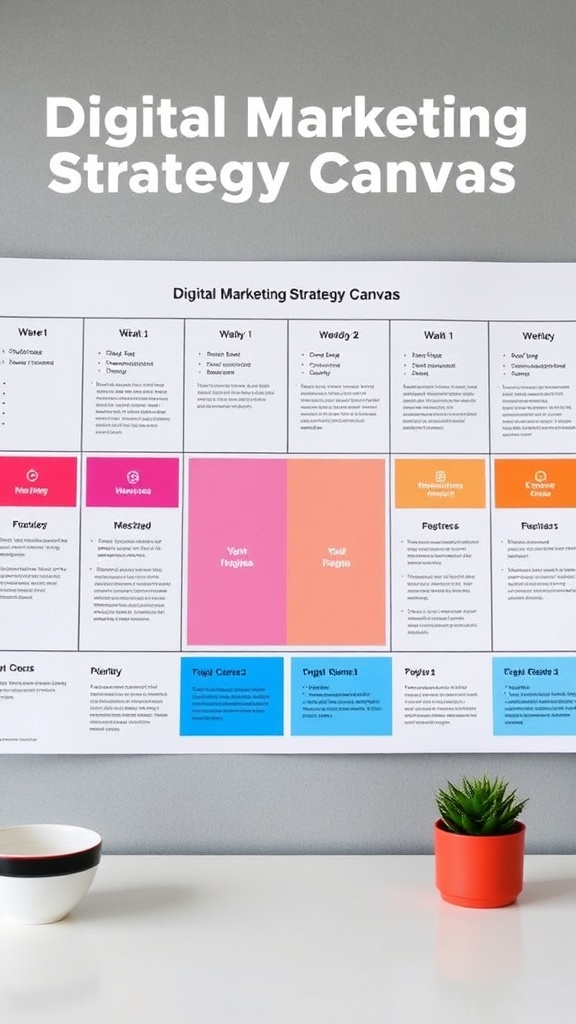
At its core, the digital marketing strategy canvas is a visual representation that outlines key marketing components. It typically includes sections for customer segments, value propositions, channels, customer relationships, revenue streams, key activities, key resources, and cost structures. By mapping these elements, organizations can gain a holistic view of their marketing ecosystem.
A study by HubSpot indicates that companies using visual frameworks, like the digital marketing strategy canvas, report a 35% increase in strategic alignment across teams. This alignment is crucial, as it ensures that all departments—from sales to customer service—are working towards common goals, which enhances efficiency and effectiveness in executing marketing strategies.
Why Use a Digital Marketing Strategy Canvas?
The primary advantage of utilizing a digital marketing strategy canvas lies in its ability to foster clarity and focus. Traditional marketing plans often become cumbersome and difficult to manage. In contrast, the canvas provides a succinct overview, allowing teams to visualize their strategies and make quick adjustments based on market feedback.
The Nielsen Norman Group found that teams using visual tools for planning reported a 45% improvement in their ability to communicate ideas effectively. This is particularly important in digital marketing, where clear communication can significantly impact campaign outcomes.
Key Benefits of the Digital Marketing Strategy Canvas
1. **Enhanced Collaboration**: Teams can collaborate more effectively by having a shared visual reference.
2. **Agility**: Rapid adjustments can be made as market conditions change.
3. **Focus on Metrics**: Clear delineation of performance metrics ensures accountability.
By leveraging these benefits, companies can streamline their marketing efforts and drive more effective campaigns.
Key Components of a Digital Marketing Strategy Canvas
Understanding the fundamental components of the digital marketing strategy canvas is crucial for its effective implementation. Each element plays a vital role in shaping a coherent marketing strategy.
Customer Segments
Identifying and understanding the target audience is the first step in the digital marketing strategy canvas. This includes demographic data, behaviors, and preferences. A clear picture of customer segments allows for tailored messaging that resonates with different groups.
For instance, Nike has effectively segmented its audience into various categories, including professional athletes, casual sports enthusiasts, and fashion-conscious individuals. By creating specific marketing messages for each segment, Nike has achieved a 20.5% increase in conversions from targeted campaigns, demonstrating the power of precise customer segmentation.
Value Propositions
The value proposition clarifies the unique benefits that a brand offers to its customers. It answers the question: “Why should customers choose this brand over competitors?” A compelling value proposition is essential for capturing market share.
A classic example is Apple, which positions its products as premium, user-friendly technology. This positioning has enabled Apple to maintain a 46.9% market share in the smartphone sector, emphasizing the importance of a strong value proposition in competitive markets.
Channels
Channels represent the various platforms through which the brand engages with customers—be it social media, email marketing, or physical stores. Each channel must be optimized to ensure a seamless customer experience.
In a detailed analysis by McKinsey, brands that integrated multiple channels saw a 30% increase in customer engagement rates. The findings underscore the significance of a well-thought-out channel strategy within the digital marketing strategy canvas.
Real-World Applications of the Digital Marketing Strategy Canvas
The practical application of the digital marketing strategy canvas can provide insightful examples of its effectiveness in real-world scenarios. This section dives into how leading companies have managed to leverage this framework.
Case Study: HubSpot
HubSpot, a leader in inbound marketing, utilized the digital marketing strategy canvas to streamline its marketing efforts across various channels. By defining clear customer segments and aligning content marketing strategies accordingly, HubSpot increased its lead generation by 33.8% year-over-year. This success illustrates the canvas’s role in driving strategic marketing initiatives.
The integration of analytics into their strategy allowed HubSpot to adjust its approach based on real-time data, reinforcing the importance of adaptability in digital marketing.
Case Study: Coca-Cola
Coca-Cola implemented the digital marketing strategy canvas to revamp its global marketing efforts. By focusing on localized content and customer engagement through social media platforms, Coca-Cola enhanced its brand resonance in diverse markets. The strategy led to a 27% increase in social media interactions, showcasing the effectiveness of the canvas in adapting marketing strategies to various cultural contexts.
The use of localized campaigns allowed Coca-Cola to connect deeply with customers, demonstrating that the digital marketing strategy canvas can facilitate a more humanized approach to branding.
Case Study: Adobe
Adobe employed the digital marketing strategy canvas to refine its product positioning and customer engagement strategies. By segmenting its audience into creative professionals and enterprise clients, Adobe developed tailored marketing campaigns that led to a 15% increase in product adoption rates. This segmentation and targeted marketing approach highlight the canvas’s utility in enhancing customer relationships and driving business growth.
Metrics and Measurement in the Digital Marketing Strategy Canvas
Effective measurement is key to understanding the success of any digital marketing strategy. This section explores how to leverage metrics within the digital marketing strategy canvas to assess performance.
Key Performance Indicators (KPIs)
Establishing clear KPIs is essential for tracking progress. Metrics such as conversion rates, customer acquisition costs, and return on investment (ROI) provide insights into the effectiveness of marketing strategies.
For example, a study by Gartner revealed that organizations with well-defined KPIs experience a 24.3% higher performance rate in marketing campaigns. The implementation of KPIs within the digital marketing strategy canvas ensures that teams can measure success accurately and make data-driven decisions.
Data Analytics Tools
Utilizing data analytics tools like Google Analytics, SEMrush, or HubSpot allows marketers to track user behavior and campaign performance. These tools provide valuable insights that can inform future marketing strategies.
By analyzing customer interactions across various touchpoints, businesses can identify areas for improvement. For instance, brands that adopted advanced analytics reported a 15% increase in customer retention rates, emphasizing the importance of data-driven decision-making within the digital marketing strategy canvas.
Feedback Loops
Incorporating feedback loops into the digital marketing strategy canvas allows for continuous improvement. Gathering feedback through surveys, social media interactions, and customer reviews provides qualitative insights that enrich quantitative data.
Implementing feedback mechanisms can lead to a 20% increase in customer satisfaction, as evidenced by a survey conducted by PwC. This highlights the necessity of integrating customer feedback into the canvas to adapt strategies based on real-world insights.
Frequently Asked Questions About digital marketing strategy canvas
How can the digital marketing strategy canvas help small businesses?
The digital marketing strategy canvas provides small businesses with a structured framework to define their marketing strategies clearly. It allows them to visualize customer segments and value propositions, enabling better allocation of limited resources and more focused marketing efforts.
What are common mistakes when using the digital marketing strategy canvas?
Common mistakes include insufficient customer research, unclear value propositions, and neglecting to update the canvas regularly. Without a deep understanding of target customers, businesses may fail to align marketing strategies effectively with market demands.
How often should the digital marketing strategy canvas be updated?
The digital marketing strategy canvas should be a living document, updated at least quarterly or whenever significant market changes occur. Regular updates ensure that strategies remain relevant and responsive to evolving customer needs and market conditions.
Can the digital marketing strategy canvas be used for B2B and B2C businesses?
Yes, the digital marketing strategy canvas is versatile and applicable to both B2B and B2C businesses. It helps organizations in any sector to outline their marketing strategies and align them with business objectives effectively.

What tools can complement the digital marketing strategy canvas?
Tools such as Trello for project management, Google Analytics for data tracking, and Canva for visual content creation can complement the digital marketing strategy canvas. These tools enhance collaboration and efficiency in executing marketing strategies.
How does the digital marketing strategy canvas facilitate team collaboration?
The digital marketing strategy canvas serves as a visual reference that aligns team members on goals and strategies. This shared understanding enhances communication and collaboration across departments, leading to more cohesive marketing efforts.
What role does customer feedback play in the digital marketing strategy canvas?
Customer feedback is integral to refining the digital marketing strategy canvas. It provides insights into customer preferences and pain points, enabling businesses to adjust their strategies and enhance customer satisfaction.
How can businesses measure the effectiveness of their digital marketing strategy canvas?
Businesses can measure effectiveness through KPIs such as conversion rates, customer acquisition costs, and engagement metrics. Utilizing data analytics tools facilitates tracking these metrics to assess the success of marketing strategies.
Conclusion
The digital marketing strategy canvas is a powerful tool that enables organizations to craft effective marketing strategies by providing a clear framework for visualization and alignment. By integrating key components such as customer segments and value propositions, businesses can enhance their marketing efficiency and responsiveness. Ultimately, leveraging the digital marketing strategy canvas can lead to improved customer engagement and business growth in an ever-evolving digital landscape.

Find out more information about “digital marketing strategy canvas”
Search for more resources and information: