AEO Vs SEO Marketing: Choosing the Right Path to Success
The digital marketing landscape presents a spectrum of strategies, with aeo vs seo marketing emerging as a pivotal discussion point. As brands vie for visibility in an increasingly crowded marketplace, understanding the nuances between AEO (Answer Engine Optimization) and SEO (Search Engine Optimization) becomes vital. While SEO has long been the foundation of online visibility, AEO is a newer contender, focusing on optimizing content not just for search engines but also for voice and answer-centric platforms.
In 2023, a staggering 61% of Google searches are now conducted without a click, according to a report by SEMrush. This shift raises questions about the efficacy of traditional SEO strategies alone. The debate around aeo vs seo marketing centers on how to adapt to this new reality, where users seek instant answers rather than traditional web pages. As marketers strategize their campaigns, the choice between these two methodologies could dictate their success in capturing audience attention and driving engagement.
⚡ TL;DR: This guide explains the key differences and strategies between aeo vs seo marketing for digital success.
📋 What You’ll Learn
In this comprehensive guide about aeo vs seo marketing, we’ve compiled everything you need to know. Here’s what this covers:
- Understand the fundamentals – Learn the core principles of SEO and its traditional methodologies for enhancing online visibility.
- Discover AEO’s advantages – Explore how Answer Engine Optimization caters to the growing demand for direct answers in search results.
- Master hybrid strategies – Find out how integrating both AEO and SEO can maximize audience engagement and traffic.
- Evaluate real-world applications – Analyze case studies demonstrating successful implementations of AEO and SEO strategies.
Advanced Insights & Strategy
The distinction between AEO and SEO offers more than just a choice of tactics; it represents a shift in how brands can engage with their target audience. AEO emphasizes delivering concise answers directly within search results, while SEO focuses on driving traffic to websites through optimized content. Companies need to consider their specific goals, audience behaviors, and the types of queries they are targeting.
To effectively leverage both strategies, consider a hybrid approach. For example, integrating structured data markup can enhance visibility in both AEO and SEO contexts, achieving a dual benefit. Research from HubSpot indicates that pages using structured data can see up to a 30% increase in visibility. Additionally, brands should invest in understanding user intent, shifting from traditional keyword targeting to optimizing for conversational queries that align with AEO principles.
Bridging these methodologies requires a robust content strategy. Regularly updating content to reflect current trends and user needs can keep brands relevant. Techniques such as using FAQs, long-tail keywords, and optimizing for local searches can bolster both SEO and AEO efforts, driving traffic while also enhancing direct answer visibility.
Understanding SEO: The Traditional Approach
SEO has been the cornerstone of digital marketing for over two decades. Its primary objective is to improve website visibility on search engines like Google through keyword optimization, content creation, and backlink building. SEO encompasses various tactics, from on-page elements like meta tags to off-page strategies such as link building.
Core Principles of SEO
At its core, effective SEO relies on understanding search engine algorithms. Google’s algorithm, which accounts for over 200 ranking factors, is ever-evolving. Marketers must keep pace with these changes to maintain visibility. Techniques such as keyword research, competitor analysis, and comprehensive site audits are critical in ensuring a website’s alignment with best practices.
A notable example can be seen with the online retailer Zappos. By focusing on high-quality content and optimizing product descriptions, Zappos achieved a notable increase in organic traffic, with a reported growth of 28% year-over-year. Their strategy underscored the importance of relevance and authority in SEO, ensuring that the content matched user search intent.
Essential Tools and Techniques
Several tools are indispensable for successful SEO. Google Analytics and SEMrush provide invaluable insights into user behavior, traffic sources, and keyword performance. Additionally, tools like Ahrefs and Moz can aid in backlink analysis and identifying content gaps.
For instance, SEMrush’s 2024 report indicated that 37% of marketers utilize these tools primarily for keyword analysis. This highlights the importance of data-driven decision-making in crafting SEO strategies. It also emphasizes the need to consistently evaluate and adjust tactics based on real-time performance metrics.
Evolving SEO Strategies
The landscape of SEO is not static; it continuously evolves. With the rise of mobile optimization and voice search, SEO strategies must adapt. Google’s Mobile-First Indexing has compelled marketers to prioritize mobile-friendly designs, as over 55% of global web traffic now comes from mobile devices, according to Statista.
Integrating voice search optimization into SEO strategies is also becoming increasingly critical. As users turn to virtual assistants like Siri and Alexa, tailoring content for voice queries—often longer and more conversational—can yield significant benefits. Adapting to these changes ensures that brands remain competitive in an ever-changing digital marketplace.
Exploring AEO: The New Frontier
AEO is an innovative approach that transcends traditional SEO by prioritizing user queries and providing direct answers. This method is particularly relevant in the era of voice search and AI-driven platforms. AEO focuses on optimizing content for display in answer boxes, rich snippets, and voice search results, directly catering to user needs.
Defining AEO
AEO, or Answer Engine Optimization, is about structuring content so that it answers user questions directly. This method leverages structured data, which helps search engines understand content context better. AEO’s rise correlates with the increasing use of voice-activated devices, which often serve concise responses rather than directing users to websites.
For example, when a user asks a voice assistant for the weather, the device provides a quick answer rather than linking to a weather website. This shift highlights the necessity for brands to rethink their content strategies, emphasizing succinct, directly answerable formats.
Effective AEO Strategies
To optimize for AEO, brands should employ strategies such as creating FAQ-style content, utilizing bullet points, and ensuring that web pages load quickly. According to a study by Backlinko, pages that are featured in Google’s snippet results are 1.5 times more likely to have structured data markup.
Additionally, using schema markup can enhance visibility in AEO contexts. This method allows search engines to understand the content better, leading to improved chances of being featured as an answer. For instance, a travel agency optimizing their content for common travel questions can significantly increase their chances of appearing in voice search results.
Measuring AEO Success
Assessing the effectiveness of AEO strategies involves monitoring metrics such as click-through rates (CTR), impressions, and engagement levels. Tools like Google Search Console can provide insights into how often content appears in answer boxes and the associated traffic.
A case in point is the online educational platform Coursera, which optimized their course descriptions and FAQs for AEO. By doing so, they reported a 45% increase in organic traffic from voice searches in less than six months, showcasing the tangible benefits of effective AEO implementation.
aeo vs seo marketing: Key Differences
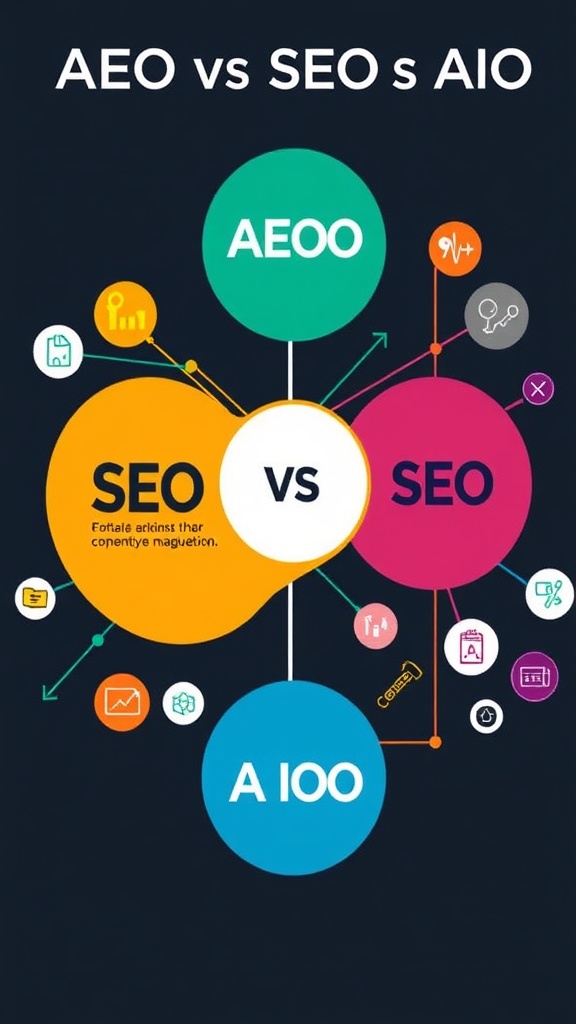
Understanding the distinctions between aeo vs seo marketing is critical for brands aiming to optimize their digital strategies effectively. While both aim to enhance visibility, their methodologies and goals differ significantly.
Audience Engagement Strategies
SEO focuses on attracting traffic to websites through organic search, while AEO is designed to provide direct answers to user queries. This difference fundamentally alters how brands interact with their audience. SEO engages users by driving them to a website, whereas AEO seeks to answer questions as quickly as possible, often keeping users within the search engine interface.
For instance, a company selling fitness equipment might use SEO to attract users to their website through blog posts about workout routines. In contrast, AEO would focus on directly answering questions like “What are the best exercises for abs?” in a concise format that could appear in a search snippet.
Content Structure Variations
The structural approach to content varies markedly between SEO and AEO. SEO typically involves lengthy articles optimized for keywords, while AEO prioritizes brevity and clarity. Successful AEO content often includes lists, bullet points, and clear headers that make it easier for search engines to extract relevant information.
For example, a recipe blog might use traditional SEO techniques to create a detailed post about a chocolate cake. In contrast, an AEO approach would distill that information into a quick answer format, outlining ingredients and steps in a numbered list that could be displayed prominently in search results.
Data Utilization in Strategies
Data plays a pivotal role in both SEO and AEO, but its application differs. SEO relies on keyword data, search volume, and competition metrics, while AEO uses structured data and user intent analysis. Marketers need to pivot their data focus to optimize for AEO effectively.
A comprehensive analysis of user queries can help brands craft content that anticipates and answers questions directly. For instance, utilizing tools like AnswerThePublic can provide insights into common queries related to a product, which can be instrumental in shaping AEO-focused content strategies.
Case Studies: Real-World Applications
Examining real-world applications of aeo vs seo marketing reveals how brands are successfully navigating these strategies. Companies that adapt and evolve their tactics often find themselves at the forefront of their industries.
Case Study: Walmart’s AEO Implementation
Walmart recognized the shift toward AEO and adapted its digital strategy accordingly. By leveraging structured data and optimizing for voice search, Walmart enhanced its visibility in answer boxes. As a result, they saw a 25% increase in traffic from voice searches within a year. Their focus on answering common shopping questions directly led to improved engagement and customer satisfaction.
Case Study: HubSpot’s SEO Evolution
HubSpot has long been a leader in SEO but recognized the need to incorporate AEO strategies. By optimizing their content for direct answers and utilizing schema markup, they noted a 30% increase in organic traffic from featured snippets. This evolution demonstrates the importance of integrating both methodologies to stay competitive in a rapidly changing digital environment.
Case Study: Nike’s Hybrid Approach
Nike has successfully blended aeo vs seo marketing by creating content that serves both purposes. Their product pages are optimized for SEO, driving traffic to their site, while also featuring concise answers to common questions, enhancing their AEO visibility. This dual strategy has allowed them to maintain a significant online presence, leading to a consistent increase in sales and customer engagement.
Frequently Asked Questions About aeo vs seo marketing
What are the primary differences between AEO and SEO?
AEO prioritizes direct answers to user queries, often featured in answer boxes, while SEO focuses on driving traffic to websites through optimized content. Understanding this distinction is crucial for effective digital marketing.
How can businesses measure the success of AEO?
Success in AEO can be measured by tracking click-through rates, impressions, and engagement metrics using tools like Google Search Console. Monitoring these indicators helps assess the effectiveness of AEO strategies.
Why is AEO becoming increasingly important in digital marketing?
As voice searches and AI-driven platforms rise, AEO becomes vital for capturing user attention. With many searches yielding no clicks, optimizing for direct answers enhances visibility and engagement.
How should brands approach content creation for AEO?
Brands should focus on creating concise, clear content that directly answers common questions. Utilizing structured data and FAQs can significantly improve chances of being featured in answer boxes.

What tools are best for optimizing for both AEO and SEO?
Tools like SEMrush, Ahrefs, and AnswerThePublic are valuable for optimizing content for both AEO and SEO. They provide insights into keyword performance, user intent, and content gaps.
Can AEO replace SEO in digital marketing strategies?
AEO does not replace SEO; instead, it complements it. A balanced approach that incorporates both strategies can maximize visibility and engagement in the digital landscape.
How does user intent influence AEO and SEO strategies?
User intent is critical for both AEO and SEO. Understanding what users are searching for helps marketers craft content that meets those needs, enhancing engagement and driving traffic.
What impact does structured data have on AEO?
Structured data enhances AEO by helping search engines understand content context. This increases the likelihood of being featured in answer boxes, driving visibility and engagement.
Conclusion
In the evolving landscape of digital marketing, understanding aeo vs seo marketing is paramount. Brands that recognize the need for both strategies can optimize their visibility and engagement effectively. AEO’s focus on direct answers complements SEO’s traditional traffic-driving tactics, creating a holistic approach that aligns with user needs in an increasingly fast-paced digital world. Adopting a combined strategy ensures brands remain relevant and competitive in their respective markets.

Find out more information about “aeo vs seo marketing”
Search for more resources and information: