Trust-First Affiliate Marketing: A Simple WordPress Plan That Works
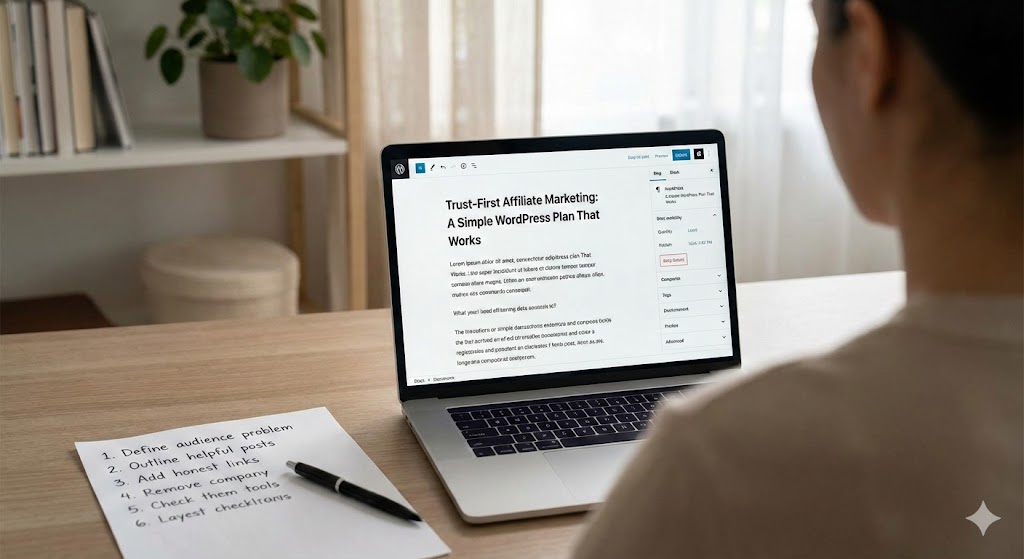
Trust-First Affiliate Marketing: A Simple WordPress Plan That Works
What is trust-first affiliate marketing, and why does it work? Trust-first
Affiliate marketing means you help first, then you recommend. You don’t
push people into buying. You guide them to the right decision
It works because most people are tired of “best product ever” content. They want clarity, not pressure.
The simple rule
If your post would still be useful without the affiliate link, you’re doing it right.
What this avoids
No fake urgency. No exaggerated claims. No pretending you “use” everything. That stuff kills trust fast.
Who are you actually helping, and what problem are they trying to solve?
If your audience is “everyone,” your content will feel generic. Generic content
doesn’t rank, and it doesn’t convert.
Pick one type of person and one situation. Make it specific enough that someone thinks, “That’s me.”
A quick way to narrow it down
Use this sentence:
“I help ___ who want ___ without ___.”
Examples:
- “I help busy parents choose a budget laptop without getting lost in specs.”
- “I help new creators pick a beginner mic without wasting money.”
What to write down today
Write a 10-word description of your reader. Then list 10 questions they ask on Google.
How do you pick affiliate products without wrecking your credibility?
Start with products you can recommend honestly. Not because the
commission is high, but because the fit is right.
You’re building a long-term asset. One bad recommendation can undo months of trust.
The “fit first” filter
Before you promote anything, check:
- Who is it for (beginner, intermediate, advanced)?
- What problem does it solve (one clear problem)?
- What are the real downsides (be honest)?
- What’s a cheaper option (give an alternative)?
If you can’t list downsides, you haven’t researched enough.
The safe product types for beginners
Tools, templates, simple services, and entry-level gear usually work well. People understand what they are buying and why.
What should your WordPress content structure look like to rank and earn clicks?
Most affiliate blogs fail because they publish random posts. You want a small set
of post types that match search intent.
Think in “content lanes.” Each lane has a job.
Lane 1: Problem-solving guides (trust builders)
These are “how to” posts. They attract people early in the decision.
Examples:
- “How to start a budget home office setup”
- “How to choose a beginner email tool”
These posts can include soft recommendations near the end.
Lane 2: Comparison posts (decision helpers)
These catch people who are close to buying.
Examples:
- “Tool A vs Tool B for beginners”
- “Best options for under $100”
Be specific about who should pick what. Don’t crown one winner for everyone.
Lane 3: Single product reviews (click earners)
These are focused. One product, one audience, one use case.
Use a simple structure: who it’s for, what it does, pros/cons, setup, alternatives, final recommendation.
Where do affiliate links go so they feel natural (not spammy)?
You don’t need links everywhere. You need links where the
reader expects them.
Your job is to make the next step obvious when they’re ready.
The clean placement strategy
Use links in these spots:
- After you explain the problem and the criteria
- In a “recommended picks” section
- Near the end, after the decision is basically made
Avoid linking in the first paragraph. Earn the click.
A simple disclosure that keeps you safe
Add a short disclosure near the top:
“This post contains affiliate links. If you buy through them, I may earn a commission at no extra cost to you.”
That’s honest. That’s enough for most cases.
How do you turn readers into leads (so you’re not starting over every week)?
Affiliate clicks are nice, but a list is leverage. This isn’t about being clever.
It’s about being consistent.
You want a simple lead magnet that matches the post they’re reading.
The easiest lead magnet to create
Make a one-page checklist:
- “My beginner setup checklist”
- “My comparison worksheet”
- “My weekly plan template”
Keep it short. People actually use short.
Where to offer it on the page
Place an opt-in:
- After the first helpful section
- In the middle after a key takeaway
- At the end as the clear next step
One offer is enough. Don’t clutter the page.
What is the simplest publishing plan that keeps you consistent?
Stop fixing things that aren’t broken. Fix the part you’re avoiding: publishing.
You don’t need 50 posts to start. You need the right 10.
A 4-week plan you can follow
Week 1: 2 problem-solving guides
Week 2: 1 comparison + 1 guide
Week 3: 2 product reviews
Week 4: 1 comparison + 1 “best for X” post
That’s 8 posts. Enough to build momentum and learn what people click.
The “done” checklist before you publish
- Clear title that matches what people search
- One main question per section
- A real recommendation with pros and cons
- Disclosure included
- One simple lead capture offer
Do this once, document it, and reuse it — that’s the leverage.
Next step: Pick one reader type, write down their top 10 questions, and publish your first problem-solving guide today.
Then add a simple checklist opt-in at the end and keep the schedule for 4 weeks.